
Leadwork · Flashing
Lead flashing repairs and replacement
Wall abutments, extensions, dormers and roof junctions, flashed in the right code of lead, cut to the right length and fixed into the mortar joint so it can move without tearing.

Quick answer
What is lead flashing and why does it fail?
Lead flashing is the strip of lead that seals the joint where a roof meets a wall, chimney or dormer. It usually fails because pieces were cut too long and split with thermal movement, the wedges or pointing came loose or someone sealed a gap with mastic instead of fixing the lead properly.
- Usual code
- Code 4
- Max piece length
- 1.5 m
- Minimum lap
- 100 mm
- Lifespan
- 80+ years
Signs your flashing has failed
- A damp patch on a ceiling or wall directly below where the roof meets brickwork.
- Lead lifting away from the wall, lifting in the wind or sitting proud of the tiles.
- Cracked or missing pointing along the top edge of the flashing.
- Splits running across the lead, often midway along an overlong piece.
- Sealant, mastic or self-adhesive flashing tape smeared over the joint, a sure sign it has been patched before.
How we fix flashing properly
We start by finding out why it failed, because copying a detail that was wrong to begin with just resets the clock. Then:
- Strip back the old flashing, sealant and loose pointing and check the soakers or upstand beneath.
- Rake out the joint in the brickwork so the new lead can be turned in about 25 mm.
- Cut and form new lead, usually Code 4, in lengths of no more than 1.5 metres, lapped at least 100 mm at each joint.
- Fix with lead wedges and repoint the joint, then dress the lead tight to the tiles or slates.
- Apply patination oil and photograph the finished detail for you.
Step flashing, cover flashing and soakers
Where a pitched roof runs up a wall, the lead is cut in a stepped profile that follows the brick courses, with each step turned into a mortar joint. On slate and plain tile roofs that step flashing sits over soakers, small pieces of Code 3 lead interleaved with each course. On interlocking tiles, a single step-and-cover flashing is dressed over the tile profile instead.
Where a flat roof meets a wall, a cover flashing laps down over the upstand of the roof covering so water runs off it, not in behind it. The same principle applies at dormer cheeks, extension roofs and bay windows. If your flashing has failed at a chimney, see chimney leadwork; if the problem is where two roof slopes meet, it's a lead valley.
What affects the cost
Flashing jobs range from an hour's re-dressing to a full day on scaffold. The main factors are the length of flashing, whether soakers need renewing too, access (ladder, roof ladder or scaffold) and the condition of the brickwork the lead is fixed into. After a free inspection we'll show you photos of the problem and give you a written quote.
Small detail, big consequences
Flashing is small work that prevents big damage and it's where corners get cut. We don't use sealant as a fix, we don't use flashing tape on anything we expect to last and we don't leave lead in lengths that will split within a few summers.
Google reviews
What our customers say
Damien's work on the entire job, from start to finish, was absolutely excellent. The communication was excellent, the team was great, they arrived exactly on time and completed some quality work. I will definitely be recommending Mionlach to anyone needing roofing work.
I was really pleased with the excellent quality of work carried out. I would recommend the Mionlach team. They were professional, polite, timely and knew what they were doing. Thank you.
Recent work
Work like this


Straight answers
Lead flashing: common questions
Anything else, call Damien on 07803 473995 or send us a photo on WhatsApp.
Can lead flashing be repaired or does it need replacing?
If the lead is sound and has only pulled out of the joint, it can often be re-wedged, repointed and dressed back. Split, thin or heavily patched lead should be replaced. We'll show you photos and tell you which applies.
Is sealant OK for fixing lead flashing?
Lead sealant has a place for pointing the joint once the lead is properly wedged, but it isn't a fix on its own. Mastic smeared over a lifted or split flashing typically fails within a couple of years, because the lead keeps moving underneath it.
What code of lead should flashing be?
Code 4 (1.80 mm) suits most step and cover flashings on houses. Code 3 is only for soakers hidden under tiles. For wide, exposed or water-holding details we step up to Code 5.
How long does it take to replace lead flashing?
A typical wall abutment on a house is usually a day's work or less once access is in place. Longer runs and work needing scaffold take longer. We'll give you a realistic timescale with your quote.
Why is my flashing leaking when it looks fine from the ground?
Many leaks come from details you can't see from the street: missing or short soakers under the tiles, a joint that was never turned into the brickwork or pointing cracked along the top edge. That's why we inspect up close and photograph what we find.
Related
Related services
-
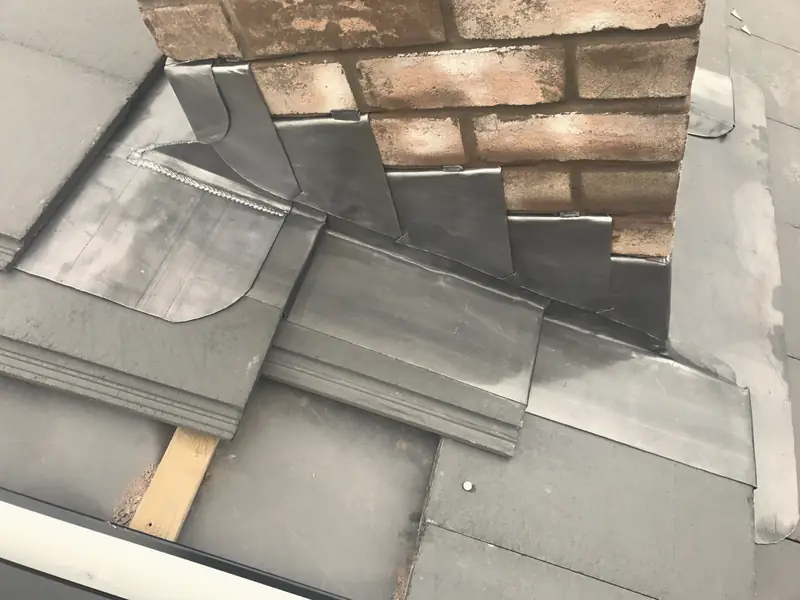
Chimney leadwork
Aprons, step flashings, soakers and back gutters rebuilt as one watertight set.
Find out more -
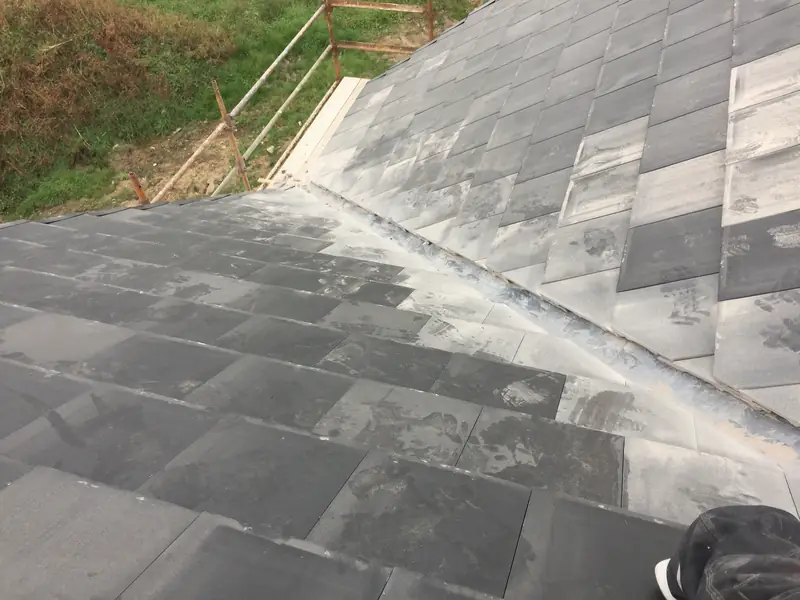
Lead valleys & gutters
Failed valleys, box, parapet and back gutters relined in coded lead.
Find out more -
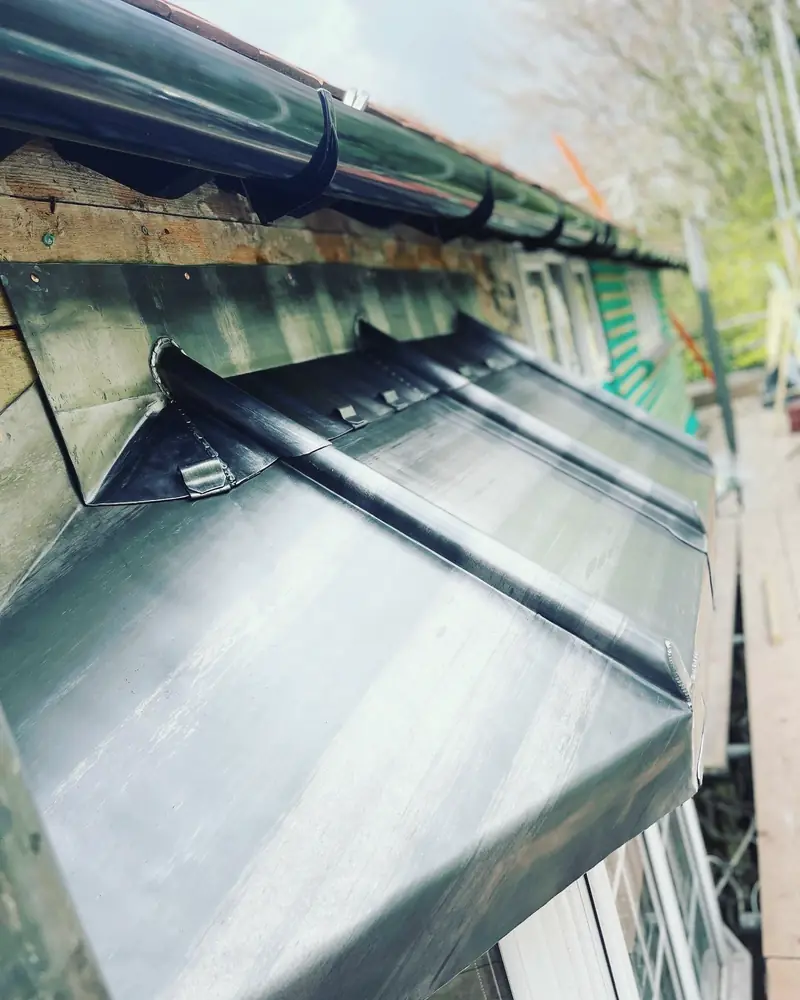
Specialist leadwork
Time-served leadwork, bossed and welded by hand. The reason Leadworx is in our name.
Find out more


Areas we cover
Lead flashing near you
Based in Bedgrove, Aylesbury, we work across the town and the places around it. Each area page covers how roofs there are built and the planning rules that apply.
- AylesburyOur home town
- BiertonAbout 1.5 miles from Aylesbury
- Stoke MandevilleAbout 2 miles from Aylesbury
- Aston ClintonAbout 4 miles from Aylesbury
- WendoverAbout 5 miles from Aylesbury
- HaddenhamAbout 6 miles from Aylesbury
- ThameAbout 8 miles from Aylesbury
- Princes RisboroughAbout 6 miles from Aylesbury
- TringAbout 7 miles from Aylesbury
- Leighton BuzzardAbout 9 miles from Aylesbury
- High WycombeAbout 13 miles from Aylesbury
- AmershamAbout 13 miles from Aylesbury
- BeaconsfieldAbout 16 miles from Aylesbury
- CheshamAbout 12 miles from Aylesbury
- Chalfont St GilesAbout 17 miles from Aylesbury
- BuckinghamAbout 15 miles from Aylesbury
Get in touch
Get a free leadwork quote
Every enquiry gets a free, detailed inspection, whatever the size of the job. Not sure what it needs? Send us a photo and we'll take a look.